
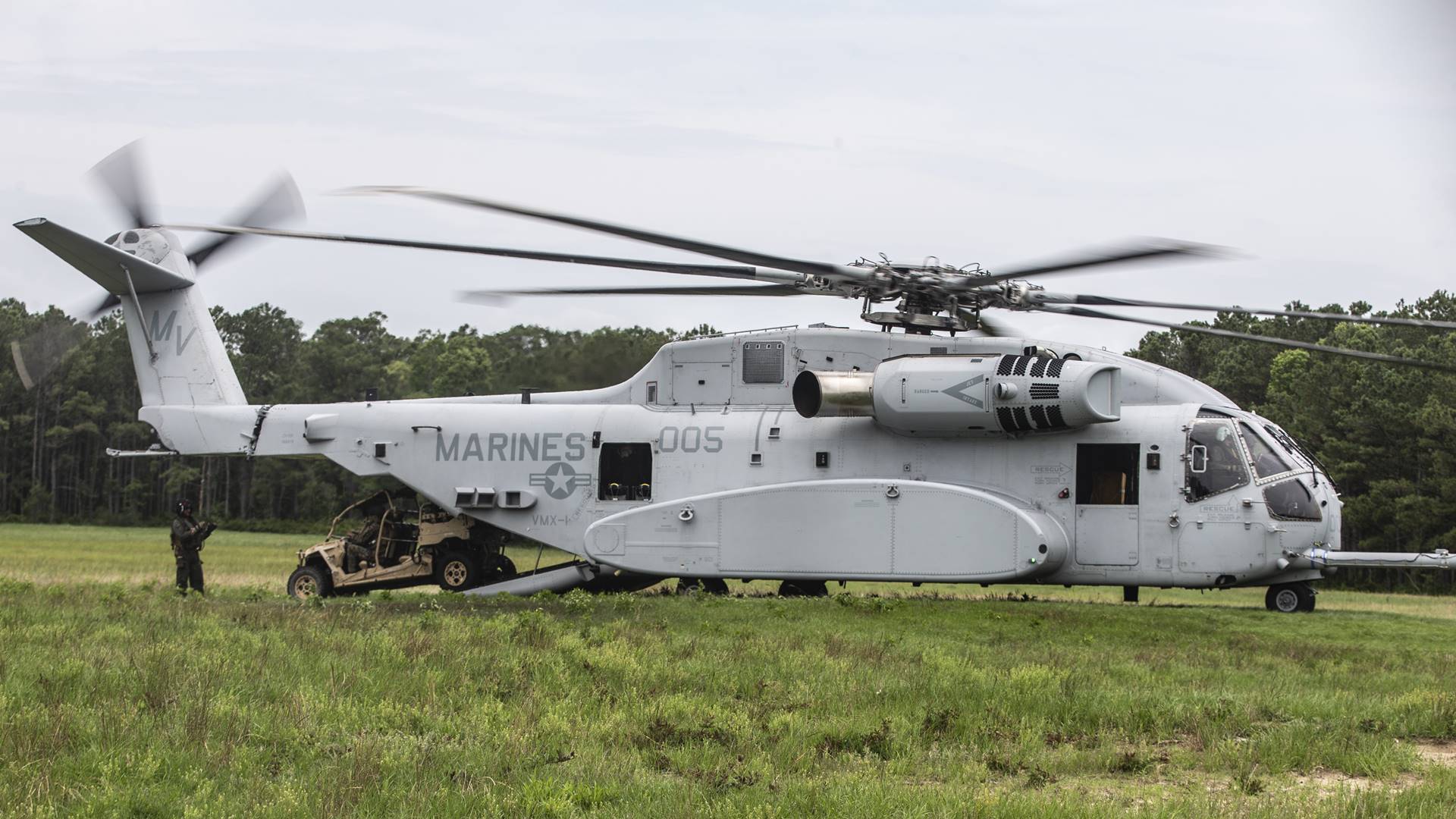
The CH-53K King Stallion is a heavy-lift transport helicopter that has been designed to meet the demanding requirements of the United States Marine Corps. The helicopter features a number of key design features that make it more capable and advanced than its predecessor, the CH-53E Super Stallion.
The CH-53K King Stallion is a development of the CH-53E Super Stallion, which has been in service with the United States Marine Corps since the 1980s. The CH-53K program was launched in 2005, with the goal of creating a more capable and advanced heavy-lift helicopter to meet the needs of the USMC. .
The development of the CH-53K has been a complex and challenging process, with multiple delays and cost overruns. The program has been affected by a number of issues, including technical challenges, software development problems, and supply chain issues. In addition, funding for the program has been affected by changes in US defense spending priorities. Despite these challenges, the CH-53K program has made significant progress, and the first helicopter was delivered to the USMC in 2018.
Production of the CH-53K began in 2013, with the first helicopter being delivered to the USMC in 2018. The CH-53K program has been affected by several delays and cost overruns, partly due to technical challenges, software development problems, and supply chain issues. However, despite these challenges, the program has made significant progress, and the first helicopter was delivered to the USMC in 2018.

CH-53K King Stallion is The Biggest Helicopter in the US Military. As of 2021, the CH-53K is still in the process of being fully integrated into the USMC’s operations, and the production of the aircraft is ongoing. The USMC plans to order 200 of the aircraft in total, and Lockheed Martin has a contract to produce the first 131 of them.
The CH-53K is being produced at Sikorsky’s facility in Stratford, Connecticut, and various sub-assemblies are being produced at other locations, such as the main rotor blades that are produced in Florida, the tail rotor blades in California, and the engines in Ohio.
One of the most notable features of the CH-53K is its new airframe. The airframe is constructed from advanced materials, such as titanium and composites, which provide a higher level of structural integrity and durability. The new airframe design also enables the CH-53K to carry up to 27,000 pounds of payload over a distance of 110 nautical miles, which is significantly more than the CH-53E.
The CH-53K is also equipped with more powerful engines, which provide increased performance and greater lift capacity. The helicopter is powered by three General Electric T408-GE-400 turboshaft engines, each producing 7,500 shaft horsepower. This allows the helicopter to fly at higher speeds and altitudes, and to operate in hot and high environments.

Another key design feature of the CH-53K is its advanced flight control system. The helicopter is equipped with a fly-by-wire flight control system, which uses electronic signals to control the aircraft’s flight surfaces, rather than mechanical cables. This provides greater control and precision, and reduces the aircraft’s weight and maintenance requirements. The CH-53K also features a glass cockpit, equipped with advanced avionics and displays, which provide the pilots with greater situational awareness and improved navigation capabilities.
Finally, the CH-53K is designed to be more reliable and maintainable than the CH-53E. The helicopter features a number of design improvements, such as a modular design, which makes it easier to maintain and repair, and a digital Automatic Flight Control System, which helps to reduce pilot workload and increase safety.
CH-53K Operational history
The CH-53K has been used in several exercises and demonstrations by the USMC, showcasing its capabilities and performance. In 2018, the CH-53K made its first deployment with the Marine Heavy Helicopter Squadron (HMH) 463 in Yuma, Arizona, for operational testing and evaluation.
In 2019, the CH-53K successfully completed its first shipboard testing, demonstrating its ability to operate from amphibious ships. The helicopter also took part in several joint exercises with the US Navy and other military services, including the Rim of the Pacific (RIMPAC) exercise in Hawaii.
In 2020, the CH-53K King Stallion successfully completed all the testing required for Initial Operational Test and Evaluation (IOT&E) and Milestone C, and was officially declared operational by the United States Marine Corps.
As of 2021, the CH-53K is still on the process of being fully operational. The USMC plan to order 200 of the aircraft in total.
CH-53K Specifications
Here are some of the key specifications of the CH-53K:
- Length: 99 feet (30.2 meters)
- Rotor diameter: 79 feet (24.1 meters)
- Height: 38 feet (11.6 meters)
- Weight (empty): 74,000 pounds (33,600 kg)
- Weight (maximum takeoff): 74,000 pounds (33,600 kg)
- Speed (cruise): 196 mph (315 km/h)
- Speed (maximum): 220 mph (354 km/h)
- Range: 110 nautical miles (204 km)
- Service Ceiling: 14,000 feet (4,267 m)
- Payload: 27,000 pounds (12,247 kg)
- Engine: Three General Electric T408-GE-400 turboshaft engines, each producing 7,500 shaft horsepower
- Crew: Two pilots and one crew chief
The CH-53K is designed to carry a wide range of payloads, including vehicles, artillery, and supplies. It can also carry up to 37 fully equipped troops. It has a cargo hook system that can lift external loads up to 36,000 pounds (16,329 kg) and a maximum internal load of 16,000 pounds (7,257 kg).

Training for the CH-53K is provided by the USMC and is designed to prepare pilots, crew chiefs, and maintainers to operate and maintain the aircraft safely and effectively.
Pilot training for the CH-53K typically includes a combination of classroom instruction and flight training. Pilots receive instruction on the aircraft’s systems, navigation, and emergency procedures, as well as hands-on training in flying the CH-53K.
Crew chief training is also provided to prepare them to maintain and repair the CH-53K. This includes classroom instruction on the aircraft’s systems and hands-on training in performing maintenance tasks.
Maintenance training is provided to prepare maintainers to perform the maintenance required to keep the aircraft in a safe and airworthy condition. This includes classroom instruction on the aircraft’s systems and hands-on training in performing maintenance tasks.
The USMC also conducts regular training exercises and evaluations to ensure that pilots, crew chiefs, and maintainers are able to operate and maintain the CH-53K safely and effectively. The CH-53K also participated in joint exercises with the US Navy and other military services, including the Rim of the Pacific (RIMPAC) exercise in Hawaii.
The CH-53K is a new aircraft and the USMC is still working on fully integrating it into its operations, this process includes training of personnel and logistics, as well as the integration of the aircraft into the USMC Tactical Air Command and Control system.

